
What is Alzheimer’s Disease?
Alzheimer’s disease (AD) is the most common form of dementia, contributing to 70% of cases worldwide. AD is a multifactorial disease, and researchers are still studying the causes and risk factors. A growing body of evidence suggests that long-term bacterial and viral infections and chronic inflammation may contribute to the development of AD in some people.
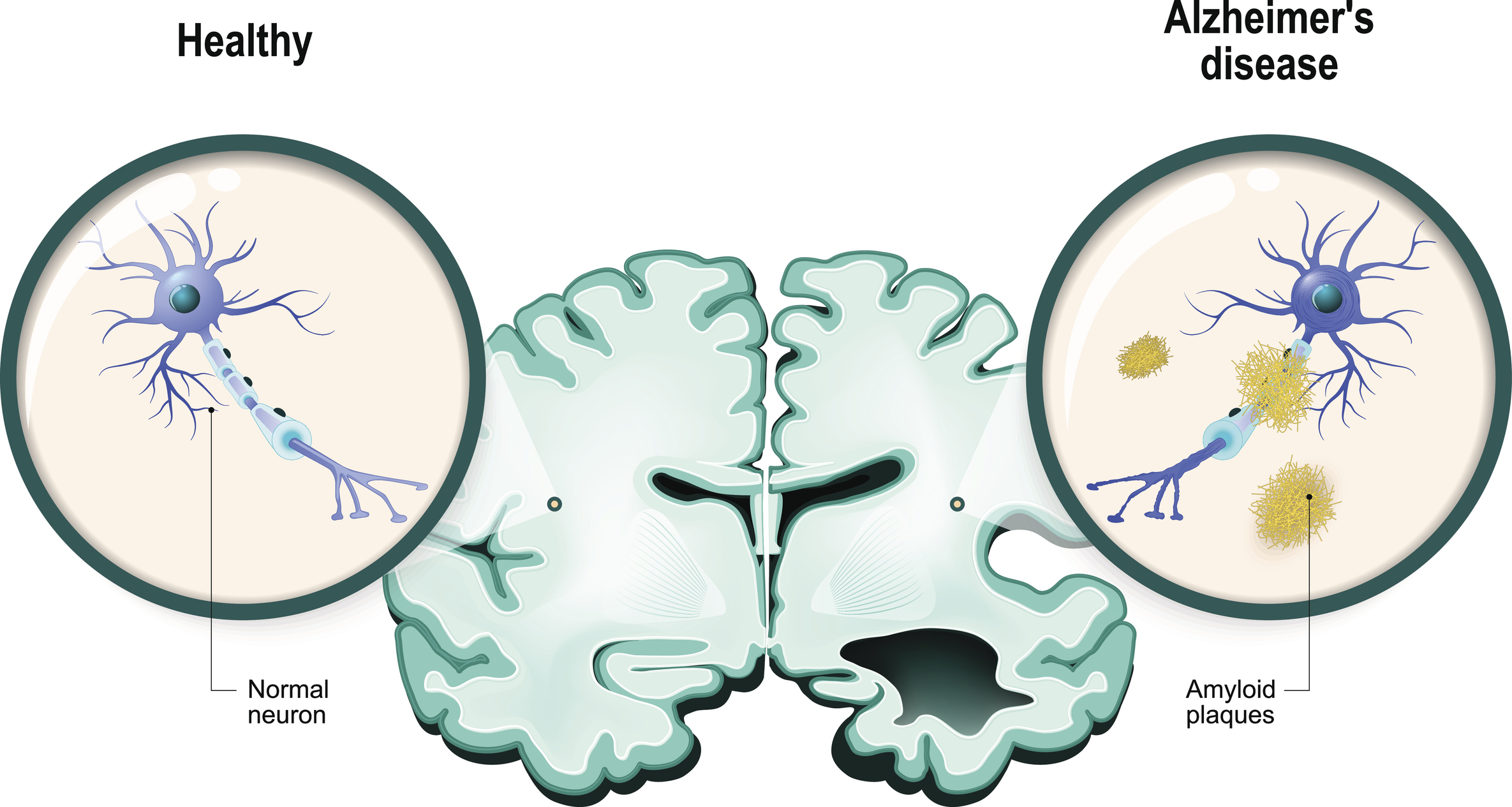
AD is associated with physical changes in the brain, including the build-up of amyloid plaques and tau tangles in response to chronic inflammation that collectively to death of neurons (brain cells), which affects memory, thinking and behaviour.
Alzheimer's disease leads to the accumulation of amyloid plaque that damages the brain cells
What is Porphyromonas gingivalis (Pg)?
Porphyromonas gingivalis is a bacterium commonly found in the mouth and is known to cause inflammation leading to severe gum disease (periodontitis). Healthcare professionals also call it Pg.
Pg colonises the tooth pocket below the gumline and releases toxins called gingipains that trick the immune system, leading to persistent inflammation and damage to the tissues supporting the tooth; eventually leading to bone loss.
Gingipains have also been shown to travel throughout the body, where they may trigger prolonged inflammation and contribute to development of other chronic diseases including AD, diabetes and atherosclerosis.
What role does Pg play in Alzheimer’s disease?
gingipains can migrate to the brain where they cause chronic inflammation and trigger amyloid plaque accumulation. Because people may remain infected with Pg for many years, this could lead to a significant accumulation of gingipains and amyloid plaque over the years, slowly damaging the brain.
Gum disease, for which Pg plays a crucial role, can accelerate cognitive decline in AD patients by up to 6-fold. Clinically this is believed to be caused by gingipains, because a recent clinical study showed that inhibition of gingipains can help reduce the rate of cognitive decline in some AD patients. This suggests that therapies against gingipains and other bacterial toxins may provide a novel way of treating AD.
What are the current treatments for Alzheimer’s disease?
There is no cure for AD. Symptoms can be managed by medication but the disease progression cannot be stopped. Recently developed therapies against amyloid plaques can provide some benefit but they are costly, require in-hospital visits and have raised some safety concerns. Thus, there remains a clear unmet medical need for new, safe and accessible therapies. GPV381 is being developed with the intention of providing a therapy that reduces chronic inflammation and limits the damage caused by gingipains, therefore tackling one of underlying causes of AD, not just managing the symptoms.
These organisations can provide you with more information about Alzheimer’s Disease.


Dementia Australia
Dementia Australia is the national peak body supporting people living with dementia.

National Institute of Aging
U.S. federal agency dedicated to research and education on and age-related diseases.
Read more about Denteric therapies and their potential to improve how periodontitis and Alzheimer’s disease are treated.